The parking lot at Pinkerton Park ends at Tinkerbell Playground. A short climb above it, the City of Franklin keeps the earthworks of a Union fort whose artillery company, on November 30, 1864, fired on the Confederate advance across the fields to the south and east. One parking lot serves the swings and the earthworks.
The Battle of Franklin's 162nd anniversary falls on Monday, November 30. The best-known ways to mark it are evening tours at Carter House and Carnton, and those cost money and have to be booked ahead. Fort Granger is free, open every day, and reached from a park that the city calls the most highly used passive park in its system. The walk goes in order from the lot to the fort and down to the river, which makes it easy to fit around the week's ticketed tours.
Start at the Lot on Murfreesboro Road
Pinkerton Park covers 34 acres on Murfreesboro Road. The Harpeth River runs along its west side and Fort Granger sits on the hill to the north. A one-mile paved pedestrian track circles the whole park. Tinkerbell Playground is next to the parking area, and a second playground stands by the pavilions. The park has three picnic pavilions with 14 tables between them, plus nine more picnic tables and grills placed around the grounds, and restrooms.
If you're planning a group gathering on a cold weekend, note that two of the three pavilions can be rented and that the middle pavilion has electrical outlets and overhead lights. The Parks Department suggests calling its administration office at 615-794-2103 to check for special events that could conflict with your plans.
Take the Trail Uphill
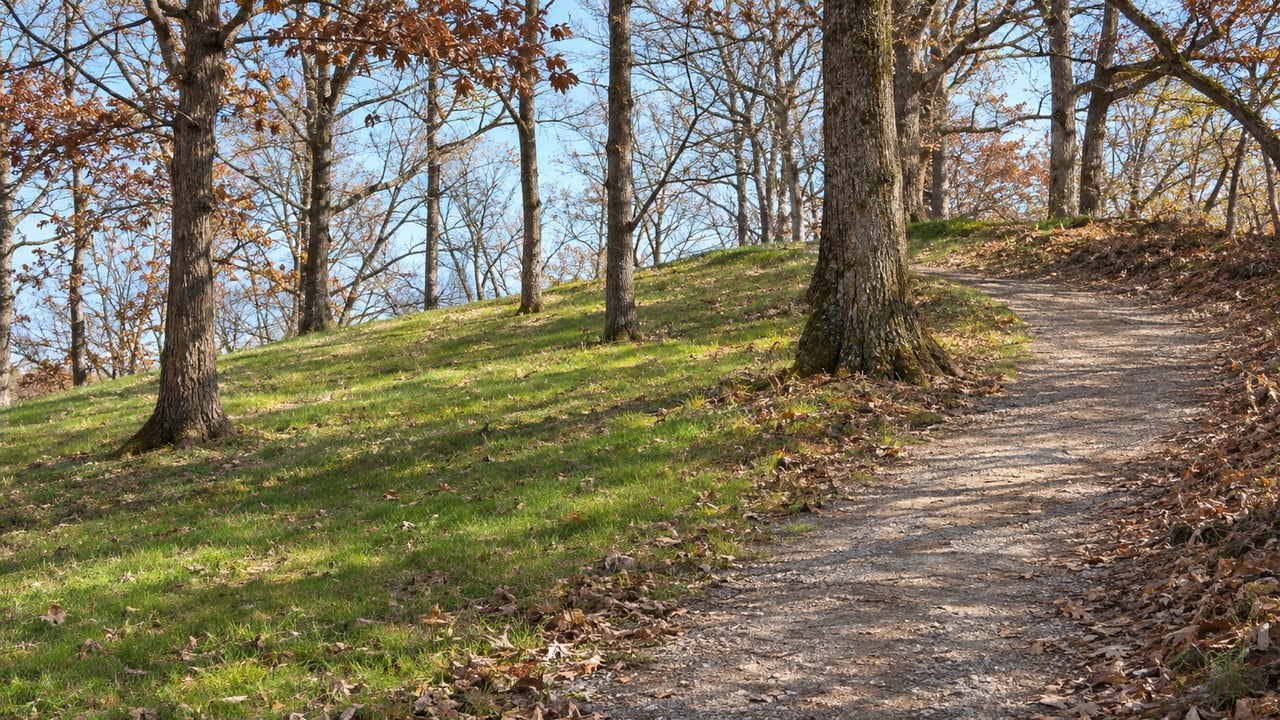
You can get to Fort Granger two ways. You can take the trail uphill from Pinkerton Park, or you can drive to the parking area off Eddy Lane. The fort's address is 105 Fort Granger Drive. Interpretive signs and walking trails are on site, and the city lists it as open daily from dawn to dark. If you're coming from the playground side, the uphill trail turns an ordinary walk around the loop into a historic site visit without moving the car.
Fort Granger is one of six historic parks that the City of Franklin owns and operates, along with The Park at Harlinsdale Farm and the one-acre Assault on the Cotton Gin memorial park on Columbia Pike. The city describes Fort Granger as a National Landmark site whose Union earthworks are still there.
What the Earthworks Were Built to Do
The fort makes sense once you see where it sits. According to the Tennessee Department of Tourist Development's Fort Granger page, it stands on a hill above a horseshoe bend in the Harpeth north of the old town, placed to protect Federal control of the railroad and of Franklin itself. Construction began in 1862 under Maj. Gen. Gordon Granger, the fort's namesake. Federal engineer Capt. William E. Merrill designed it and oversaw the work.
The same state page describes the fort's scale. It enclosed 12 acres and at one point was big enough to hold 8,000 men and 24 pieces of artillery, with space for a 9,000-gallon cistern, a 1,200-round powder magazine and a supply of 70,000 rations. Those trenches you walk past were once part of a self-contained garrison.
The fort's guns were fired before the famous battle. The city's historic parks page says Fort Granger's artillery saw action twice in 1863 against Confederate cavalry. The state account describes one of those fights. On April 10, 1863, Gen. Earl Van Dorn tried a raid on Franklin by way of Lewisburg Pike, and the Federal force drove his men back with help from the fort's artillery. After that, the post was neglected. The state page quotes an April 1864 report describing it as being in a "dilapidated condition."
November 30, 1864, From the North End
Most Battle of Franklin sites tell the story from the south, where the Confederate assault hit the Federal line around the Carter family's farm and cotton gin. Fort Granger tells it from the north end. The city says the fort was a command post for Union Maj. Gen. John M. Schofield during the battle.
The Tennessee Department of Tourist Development writes that a company of the 1st Ohio Volunteer Light Artillery was posted at Fort Granger that day, one mile due north of the Federal front line, covering the ground to the south and east. The same page credits the fort with a key role in turning back Gen. Edward Walthall's advance. It also quotes Walthall, years later, describing "the most deadly fire of both small-arms and artillery that I have ever seen troops subjected to."
That distance is the useful detail. If you stand on the earthworks knowing the guns fired from a mile behind the line, the scale of the battlefield makes more sense than it does from any one house museum. The state page says the fort and its trail have several overlooks of the city, and admission is free.
Back Down to the Harpeth
Pinkerton Park also has one of Franklin's in-town river access points. The City of Franklin's canoe access list includes Pinkerton Park, and the city tells paddlers to pick their entry and exit points and check river conditions before they go.
The launch was a community project. Williamson Scene reported that a Leadership Franklin class, in its 20th year, set out to make the 16 miles of river in Franklin easier to reach. The class raised close to $5,000 in cash and about the same amount in donated materials, and it worked with the Parks Department, which did most of the construction during a December stretch of good weather. Wooden steps surrounded by gravel lead down to the water at a bend in the river, a spot where an earlier canoe access had washed out in the 2010 floods.
If you're planning a warmer-weather float, the National Rivers Project lists a Harpeth segment from Pinkerton Park downstream to The Park at Harlinsdale Farm, and another segment that ends at Pinkerton coming from Eastern Flank. That puts the playground lot between two of Franklin's battlefield-era parks on the water too.
On foot, the Sue Douglas Berry Memorial pedestrian bridge connects Pinkerton Park with downtown. A morning that starts at the fort can end on Main Street without moving the car. Farther along the river, Bicentennial Park sits between 3rd Avenue, North Margin and the Harpeth, with its own greenway, river overlook and walking trail.
Anniversary Week, With and Without a Ticket
The Battle of Franklin Trust's 162nd anniversary commemoration has 60-minute guided tours that focus on what soldiers and families went through on the evenings of the battles. The Rippa Villa tours run Sunday, November 29, at 7 and 8 p.m., and the Carter House and Carnton tours run Monday, November 30, at the same times. Each tour costs $30 per person, groups are capped at 20, and tickets must be bought online in advance. The Trust asks visitors not to book both Carnton and Carter House, since there isn't time to travel between them, and children under 6 are not permitted.
On Saturday, November 28, the Trust also has a daytime anniversary tour with historian Eric Jacobson. It starts at 1 p.m. at Carter House and the Franklin battlefield and runs about 90 minutes. The $40 ticket includes Jacobson's book. The tour is for ages 10 and up, is capped at 25 people, and tickets are sold online.
Fort Granger fits around all of those. Because it's open dawn to dark and costs nothing, you can walk up from Pinkerton Park on Saturday morning before the Jacobson tour, or in daylight on the 30th before an evening tour at Carter House or Carnton. Seeing the Union artillery position first, a mile north of the front line, gives you a sense of how wide the field was before you stand at the center of the fighting.
After the anniversary, the city's December events move to The Park at Harlinsdale Farm. The Flashlight Candy Cane Hunt runs December 9, 10 and 11 with sessions at 5 and 6:30 p.m., and preregistration is required. Our rundown of Franklin's December calendar covers the rest of the month.
If a walk from the Tinkerbell Playground lot up to Fort Granger sounds like your kind of weekend, The Phillips Group can help you find a home close to the Harpeth, Franklin's historic parks and downtown. Browse our Franklin neighborhood guide to start your home search.